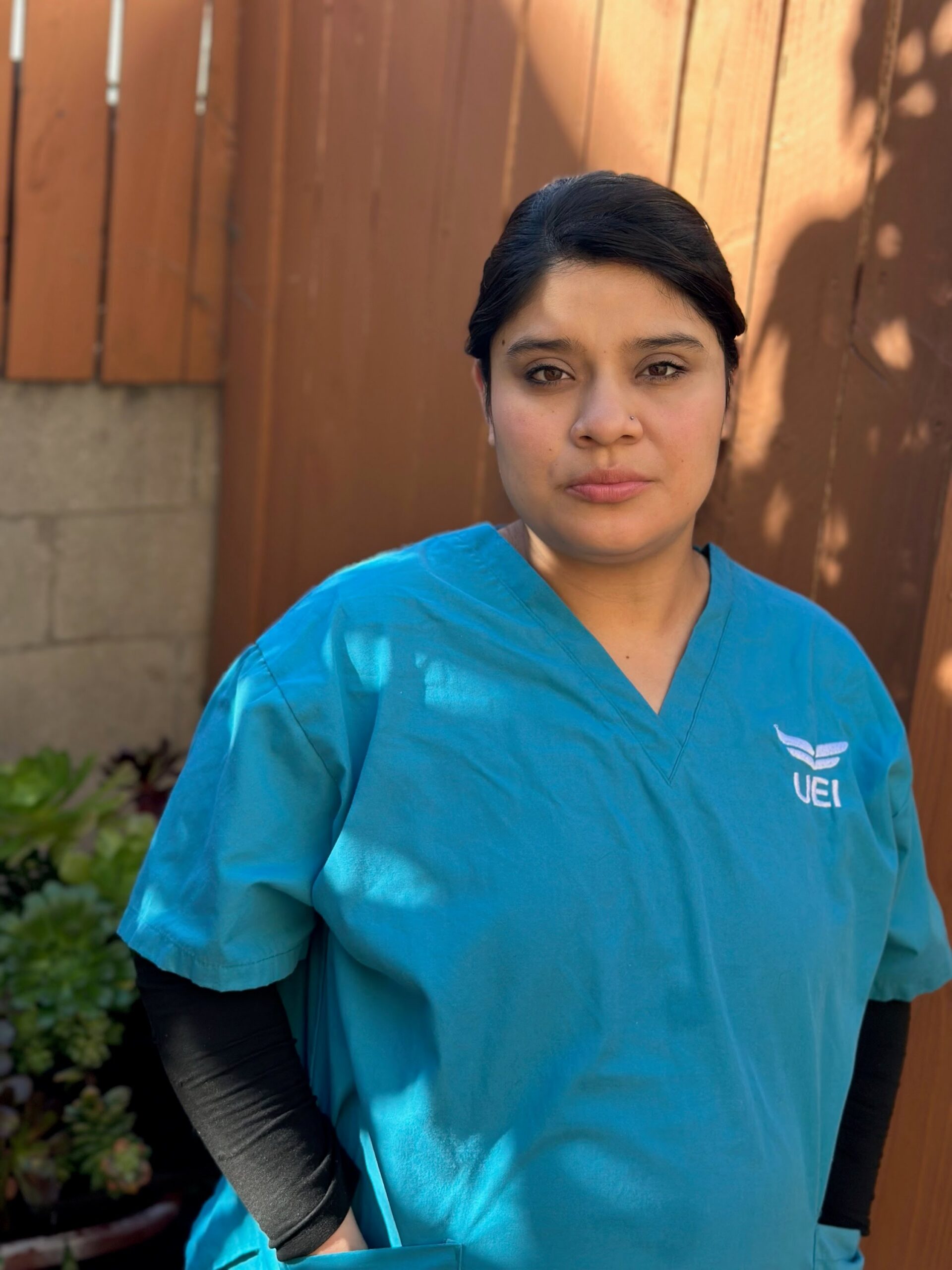


Tacoma Automotive Student Building on Her Dad’s Legacy
Trier Powell learned about cars the way many technicians do: standing beside her father in the garage.
A retired military mechanic, he rarely turned a wrench without Trier watching intently, asking questions, and absorbing the basics. Those early garage sessions ignited an interest in automotive repair that followed her into adulthood. After her father passed away in early 2024, that passion took on a much deeper, more personal meaning.
“It was something that made me feel very close to my dad after I lost him,” Trier said.
While navigating grief, Trier enrolled in the Automotive Technician program at UEI College in Tacoma, Washington. Encouraged by her fiancé—a graduate of the exact same program—she decided the time had arrived to build formally on the mechanical foundation her father had passed down.
Today, she applies those diagnostic and repair skills in everyday life while pursuing opportunities in the automotive trade, keeping her father’s legacy alive under the hood.
Building on What She Learned from Her Dad
Before arriving at the College, Trier worked at O’Reilly Auto Parts, completed introductory vocational coursework through Job Corps, and continued learning from her father whenever possible.
Still, she recognized that turning a passion into a sustainable trade required structured, advanced training.
The timing also aligned. Her fiancé, Nick, had recently completed the automotive program at the College and transitioned into a role as a technician at Jiffy Lube. Seeing his success assured Trier that the program offered a practical vehicle to reach her own goals.
“It was a focused, hands-on program,” she said. “I didn’t want to spend two or three years in school trying to get a theoretical degree. I wanted direct technical training I could immediately put to use.”
Balancing school with multiple employment responsibilities required immense discipline. Trier was working as an in-home caregiver while concurrently driving student transport vans.
“I felt like a fish out of water at first,” she recalled of her first few days on campus. “Balancing multiple shifts with evening lab hours was demanding. It took me a few weeks to adjust to the rhythm of being back in the shop and classroom.”
She credits automotive instructor Michael O’Brien with smoothing that transition and fostering her growth.
“Mr. O’Brien was an amazing instructor,” Trier said. “He brought deep industry knowledge to the shop floor, and anytime I had questions, he took the time to walk me through the solution.”
Interested In Our Automotive Technician Program? CLICK HERE >
Skills She Continues to Use Every Day
Trier completed the program and quickly earned a position in the automotive sector. While medical circumstances required her to step away temporarily, the technical foundation she acquired at the College remains integral to her daily routine.
“My fiancé is a professional mechanic,” she said. “Whenever he’s turning wrenches at home or we’re helping someone troubleshoot their vehicle, he asks for my input or hands me a tool to collaborate on the repair.”
One of her most valuable takeaways was moving beyond basic parts replacement to understand systematic diagnostic problem-solving.
“I use what I learned about braking systems and suspension geometry constantly,” Trier explained. “Listening for specific noises while driving, evaluating brake pedal feedback, and feeling how the chassis reacts on the road—those are diagnostic habits I rely on now.”
Beyond the technical competencies, the shop environment instilled independent problem-solving and self-assurance.
“It helped me believe in my capabilities,” she said. “It taught me to be methodical, diagnose the root cause, and slow down instead of rushing through a repair.”
For anyone hesitating to enter the skilled trades, Trier emphasizes pushing past uncertainty.
“If someone wants to work on cars or already has some basic garage experience and wants to expand their skill set, I say go for it,” Trier said. “Don’t let doubt hold you back. Invest in the training and build a career doing what you love.”
For Trier, every turn of a ratchet and every resolved electrical fault serves as an enduring tribute to the mechanic who first introduced her to the craft.
“It keeps me connected to my dad,” she said. “That’s something I’ll always carry with me.”