

Is a Dental Assisting Career Worth It?

| Update: April 22, 2026
Dental assisting is worth it for people who enjoy hands-on patient care and working in a fast-paced environment. It's one of the more accessible paths into healthcare, with training programs that can be completed in as few as 10 months. At UEI College, the Dental Assistant Program combines online coursework with hands-on lab training and a clinical externship, preparing students for entry-level positions in dental offices and clinics.
What is a Dental Assistant?
Dental Assistants are the glue that holds a dental office together. They help with each part of a dental office, ensuring patients feel comfortable and receive quality care. Depending on the size or specialty of the office, a Dental Assistant may work solely in the front completing administrative tasks, or they may be on their feet all day in the back office assisting the dentist and preparing exam rooms.
A Dental Assistant is exactly as the name suggests: an assistant who helps dentists, hygienists, and other staff members in a dental office or clinic. They take care of the day-to-day tasks that keep the office clean and sterilized, keep records up to date, and make patients feel welcome. It's a rewarding career for anyone who enjoys helping people.
Is it Worth it to Become a Dental Assistant?
Becoming a Dental Assistant is exciting and rewarding, but there are some things you should know before committing. The most commonly cited reasons include helping patients improve their oral health, resolving acute dental pain, and calming anxious patients.
That said, the role is not for everyone. Here's a practical breakdown of the pros and cons.
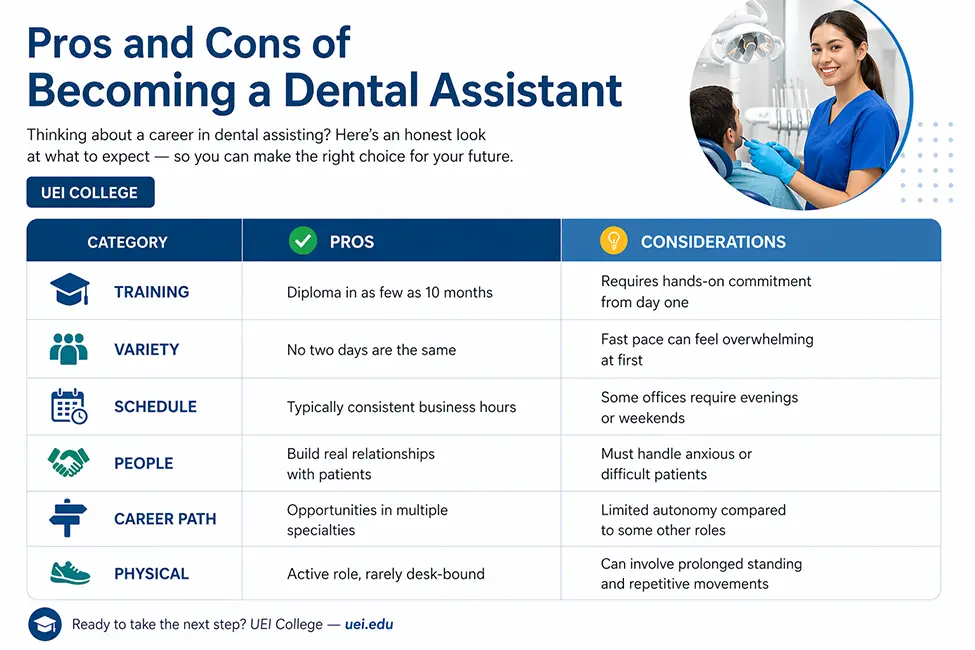
Pros and Cons of Becoming a Dental Assistant
- Quick training. Training to become a Dental Assistant can be completed in as few as 10 months, setting you up for a career you can be proud of. This makes dental assisting a great option for anyone looking to begin a new career without spending years in a classroom.
- Opportunities. Graduates can pursue positions in a range of dental environments. With the proper training, you can work in endodontics, orthodontics, pediatric dentistry, family dentistry, or oral surgery. Skilled dental professionals are needed to support patient care across all of these settings.
- Convenient hours. Most Dental Assistants work typical business hours, though depending on the office, you may be asked to work evenings or weekends. This career typically offers consistent hours you can count on, whether full-time or part-time.
- Connect with patients. Maybe one of the greatest parts of being a Dental Assistant is playing a role in helping patients smile. Dental Assistants greet patients, lead them to the exam chair, and ensure their procedure runs smoothly. If you enjoy getting to know people and helping them feel comfortable, this is a great opportunity.
- Lots of variety. Dental Assistants work across all aspects of a dental office. They may schedule appointments, greet patients, update records, restock exam rooms, take X-rays, and assist chairside during procedures. If you're fascinated by teeth and the human body, you'll find something new to learn each day.
- Great stepping stone. The profession is also a strong entry point into the broader dental field. As your training progresses, you may find one area of the office you'd like to explore further. The skills you build as a Dental Assistant can open doors to specialty settings and additional professional development down the road.
Cons of Becoming a Dental Assistant
- A bit stressful. Some may find all the variety of a Dental Assistant's role to be stressful. It requires flexibility and a willingness to step in wherever needed. Each day is unique, and while that excites some people, it's not a great fit for everyone.
- People skills are non-negotiable. A Dental Assistant works directly with patients and the dental team to ensure the office runs smoothly. Managing patients who are anxious, in pain, or short-tempered requires genuine emotional intelligence. This isa great career for people who can stay calm and connect with others, but a poor fit for those who struggle with customer-facing interactions.
- Physical demands. Dental assisting is not a desk job. The role involves frequent standing and moving between operatories throughout the day, which can contribute to back, neck, and arm fatigue over time. Personal protective equipment, including gloves, masks, and safety glasses, is worn for most of the workday.
Should I Become a Dental Assistant?
If you enjoy working with people and are genuinely interested in dental care, becoming a Dental Assistant is worth serious consideration. As a Dental Assistant, you'll play a meaningful role in helping patients feel comfortable and confident visiting their dentist.
A few questions worth asking yourself before enrolling:
- Do I enjoy working directly with people, including those who may be nervous or uncomfortable?
- Am I comfortable in a fast-paced environment where my responsibilities shift throughout the day?
- Do I want to enter the workforce quickly rather than spend years in school?
- Am I interested in dental health and the procedures involved in oral care?
If the answers are mostly yes, this career path is worth pursuing. If you strongly prefer predictable, solitary, or desk-based work, it may not be the right fit.
Where Can Dental Assistants Work?
Dental Assistant training is versatile. Graduates can pursue entry-level positions across a range of settings, including:
- Private dental practices (solo and group)
- Orthodontic offices
- Pediatric dentistry clinics
- Oral surgery centers
- Endodontic practices
- Community health clinics and public health settings
Learn more about how to become a dental assistant and what each path looks like.
How Long Does It Take to Become a Dental Assistant?
The length of training depends on the path you choose. Here's how the main options compare:
| Path | Typical Duration |
| Certificate | 6–12 months |
| Diploma | In as few as 10 months |
| Associate's Degree (AAS) | 24 months |
| On-the-job training | Varies by state |
When evaluating programs, look for one that balances speed with thorough coverage of clinical and radiographic procedures. Moving quickly through a program only matters if you're actually prepared to work when you finish. Learn more about how long it takes to become a dental assistant.
Enroll at UEI College's Dental Assistant Program
Don't let anything stop you from achieving the career you've been working toward. The Dental Assistant Program at UEI College is a practical, hands-on way to enter this field. Smaller class sizes mean real access to your instructors, and the program's hybrid format combines online learning with hands-on lab work so you build real skills before graduation.
UEI's Career Services team provides job placement assistance to help you find entry-level opportunities at dental offices in your community. Many students receive job offers directly from their externship sites, where dental employers use the externship to evaluate potential hires. Career services provides job placement assistance for all of its graduates.
Financial aid is available for those who qualify. Our financial aid team will walk you through every option and help you build a plan that fits your situation.
The Dental Assistant Program at UEI College can be completed in as few as 10 months. Get started today.