
What Does “Hybrid” Mean for HVAC Training Programs? (2026)
In HVAC training, “hybrid” means the program splits instruction between online learning and in-person lab work. Lectures and theory happen remotely. Hands-on practice with actual HVAC equipment happens on campus. At UEI College, our Heating, Ventilation and Air Conditioning (HVAC) program uses this format: students complete assignments and attend live lectures online, then come to campus approximately two days per week for discussions and supervised hands-on lab work.
Quick note: if you searched “hybrid HVAC” looking for information about hybrid heating systems (a heat pump paired with a gas furnace), that’s a different topic. This article covers hybrid as a training delivery format, meaning how an HVAC program is structured and taught.
What “Hybrid” Means Across HVAC Training Programs
The word “hybrid” gets used broadly across education, and it doesn’t mean the same thing from one program to the next. A 2022 study led by the WICHE Cooperative for Educational Technologies (WCET) defined hybrid learning as a blend of online and in-person instruction, with the online portion potentially synchronous (live) or asynchronous (self-paced). That’s a useful starting point, but it’s deliberately general. The definition identifies the combination of formats without prescribing how many days per week are online, how many are on campus, or what percentage falls into each category.
Two programs could both call themselves hybrid and have very different structures. One might require campus attendance three days per week. Another might bring students in for concentrated weekend lab sessions. Seeing “hybrid” on a program page doesn’t, by itself, tell you what your weekly schedule will look like.
For an HVAC program specifically, how the hybrid time is divided matters more than it might for other fields. HVAC is physical work. Technicians install, repair, and maintain heating, cooling, and refrigeration systems. That involves working with electrical components, handling refrigerants, brazing pipe connections, and diagnosing system faults using specialized tools. These activities can’t be replicated through a screen. So when you’re evaluating a hybrid HVAC program, the most important thing to understand is exactly how the hands-on portion is structured.
What a Typical Week Looks Like in UEI’s Hybrid HVAC Program
Because hybrid programs vary, the best way to explain the format is with a concrete example.
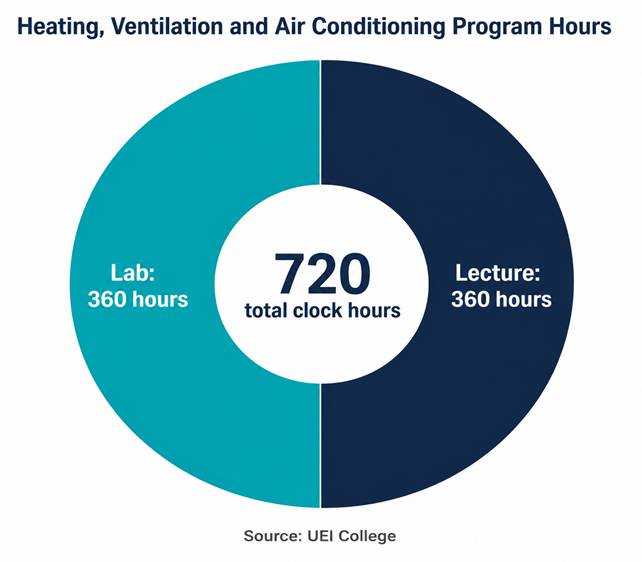
UEI College’s HVAC program is built around nine modules, each consisting of 80 clock hours split between lecture and lab (40 hours each). There are two lectures per week, and they are one hour each. The program totals 720 clock hours and can be completed in as few as 10 months. Both day and evening class sessions are available.
The weekly structure breaks down like this:
| Online | On Campus | |
| What happens | Live lectures, coursework, assignments, discussion boards | Hands-on lab work with HVAC equipment, in-person discussions |
| When | Throughout the week | Approximately 2 days per week |
| Schedule options | Varies by module | Morning and evening sessions available |
| Instructor interaction | Live lectures; instructors respond to online work within 48 business hours | Direct supervision during all lab activities |
This setup moves the conceptual learning (theory, regulations, system principles) online and reserves campus time for the work that requires physical equipment and instructor supervision.
What Happens During the Online Portion
The online component covers material that can be effectively taught through lectures and structured coursework: refrigeration theory, HVAC system principles, building codes and regulations, energy efficiency concepts, and electrical fundamentals for HVAC systems.
At UEI, this includes live lectures where students can ask questions in real time, along with assignments and discussion boards. Instructors are required to respond to students’ online work, projects, and discussion boards within 48 business hours.
There’s a schedule, live teaching, and accountability built into the online portion. The flexibility comes from not needing to commute to campus every day for content that doesn’t require physical equipment.
What Happens During On-Campus Lab Days
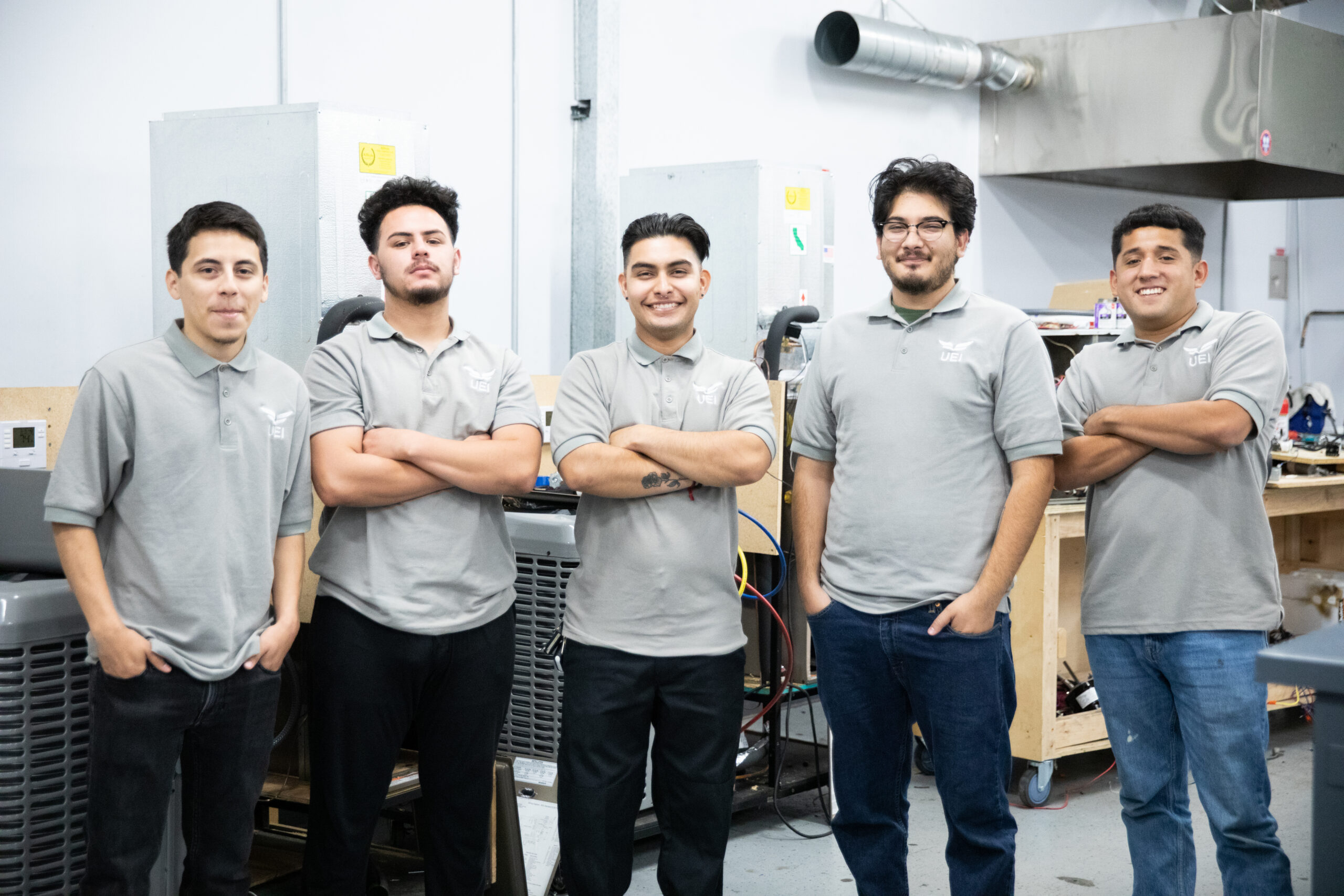
The on-campus portion is where physical skills training takes place. This is supervised lab work on actual HVAC equipment, not another lecture in a different room.
In our HVAC labs, students work with:
- Residential and commercial HVAC units
- Furnaces and air conditioners
- Heat pumps and refrigeration systems
- HVAC tools including manifold gauges, vacuum pumps, and recovery machines
- Brazing equipment
- Testing and diagnostic instruments
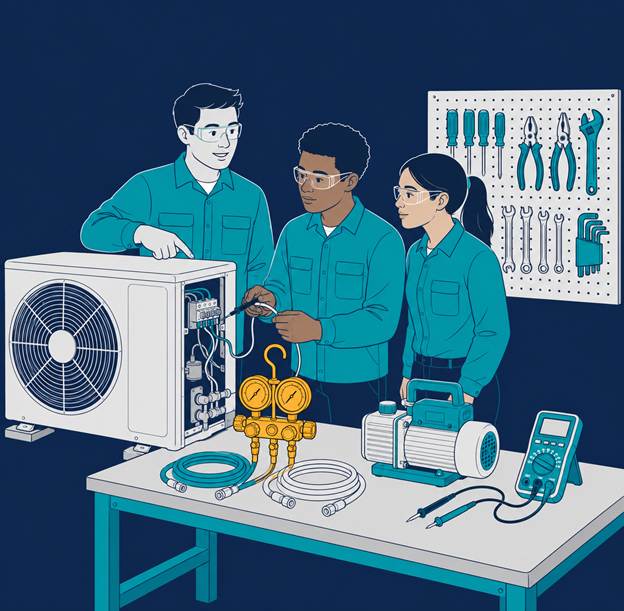
The lab curriculum covers practical work like system evacuation, compressor-component replacement and system charging, electrical diagnostics using industry tools and meters, and troubleshooting residential and light-commercial air conditioning and heat pump systems. You can read more about the full curriculum in our breakdown of what you learn in an HVAC program.
Industry training standards reinforce why this in-person component matters. When students work with refrigerants, energized equipment, open flames, or high-pressure systems, an instructor or qualified lab supervisor must be physically present and maintain continuous observation, with a student-to-supervisor ratio capped at 25:1. Online instruction simply can’t replace that level of supervised physical practice.
Will You Get Enough Hands-On Training in a Hybrid Program?
This is the most common concern prospective students raise about hybrid HVAC programs, and it’s a reasonable one. If the word “hybrid” makes you picture someone watching videos and calling it trade training, that skepticism makes sense.
The better question isn’t just “how many days am I on campus?” It’s what you actually do during those lab sessions and how your skills are evaluated.
A program might advertise a high number of lab hours but use them loosely. A well-structured hybrid program uses campus time intensively for assessed, supervised physical work.
It’s also worth understanding that formal training, whether hybrid or fully in-person, is the starting point for an HVAC career, not the finish line. Entry-level technicians typically continue developing their skills on the job, working alongside experienced technicians and progressively taking on more complex work. If you’re weighing whether completing a formal HVAC program is the right path, consider what it provides: structured theory, foundational hands-on skills, safety training, and certification preparation that position you to pursue entry-level employment and keep building from there.
Who Is Hybrid HVAC Training a Good Fit For?
The hybrid format works well for people who need flexibility but still want structured, in-person training. That often includes:
- Working adults who can’t commit to a full-time, five-days-per-week campus schedule
- Parents who need to work around childcare or family responsibilities
- Career changers managing existing commitments while training for a new field
- Anyone who values efficiency: online lectures cover the theory from home, and campus time is reserved for the lab work that counts
At UEI, both morning and evening in-person sessions are available, which gives students additional options for fitting campus days into their schedules. With flexible start dates, you don’t have to wait for a specific semester to begin.

The hybrid format is one way to structure an HVAC program. It’s not inherently better or worse than a fully in-person program. What matters is whether the program’s structure fits your life and whether the hands-on training is substantive, properly supervised, and assessed against clear standards.
How EPA Section 608 Certification Fits In
One outcome of an HVAC program is certification preparation, particularly for EPA Section 608.
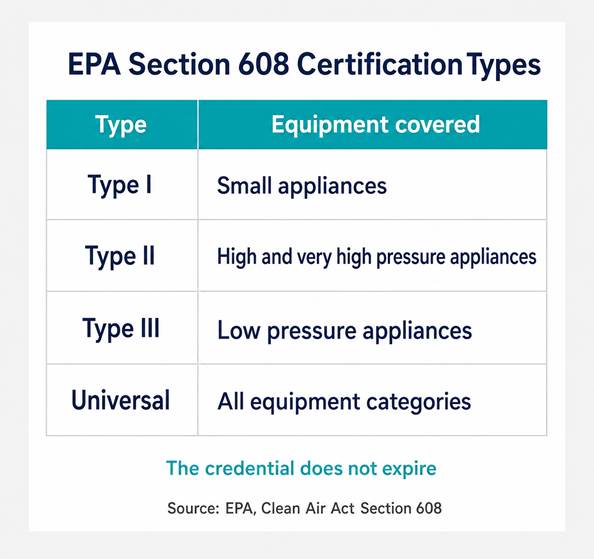
Under Section 608 of the Clean Air Act, technicians who perform covered refrigerant-related service activities must pass an EPA-approved test. This applies to work like attaching and detaching hoses and gauges, adding or removing refrigerant, and other activities involving the integrity of covered appliances. There are four certification levels: Type I (small appliances), Type II (high- and very-high-pressure appliances), Type III (low-pressure appliances), and Universal (all equipment categories). Once obtained, the credential does not expire.
At UEI, EPA Section 608 certification is a graduation requirement. The program also prepares students for Low GWP Refrigerant Safety Training and Certification, which is encouraged but not required for graduation.
It’s worth understanding what this certification covers and what it doesn’t. EPA Section 608 validates your knowledge of refrigerant regulations, recovery procedures, leak detection, and safety. It does not validate every hands-on HVAC skill, like brazing, full system installation, or complex diagnostics. The lab training and the certification preparation complement each other: the certification covers the regulatory and refrigerant-handling knowledge, while the lab work builds the broader physical skill set you’ll use on the job.
Questions to Ask Before Enrolling in a Hybrid HVAC Program
Not all hybrid programs are structured the same way. Before you commit, these questions will tell you more than the word “hybrid” alone:
- How many days and hours per week will I be on campus? Get the specific schedule, not just the label
- Which lessons are live and which are self-paced? There’s a meaningful difference between attending scheduled online lectures and watching pre-recorded videos on your own time.
- What equipment will I physically work on? Look for programs that train on residential and commercial HVAC systems, not just computer simulations.
- How are hands-on skills tested? Ask whether instructors evaluate lab performance with documented criteria and whether you must demonstrate competency before advancing.
- Does the program prepare me for EPA Section 608 certification? This is a legal requirement for refrigerant work, and a program that includes this preparation is giving you something you’ll need in the field.
Start Your HVAC Training at UEI College
UEI College’s Heating, Ventilation and Air Conditioning program is built for people who want real hands-on training with the flexibility to handle the rest of their lives. Online lectures cover the theory. Twice-weekly campus labs put you on actual equipment with industry-experienced instructors. And you can complete the program in as few as 10 months.
UEI College has been training students for over 40 years across 22 campuses in 7 states. Our HVAC program is available at campuses in Arizona, California, Georgia, Nevada, New Mexico, Texas, and Washington, with career paths that span residential, commercial, and refrigeration work.
Visit our HVAC program page to learn more about class schedules, financial aid options, and upcoming start dates.