
What’s a Good Way to Learn a Skilled Trade?

| Update: November 14, 2025
Like to build, fix, or create? A career in the skilled trades could be for you. You’re moving, problem-solving, and creating tangible results, whether that’s fixing an engine, wiring a home, or installing an HVAC system. The best place to start is to search for focused, short-term training programs that combine classroom instruction with hands-on experience. Trade schools like UEI College are designed to help students gain real-world skills and complete their program in under a year.
Types of Skilled Trades
Skilled trades cover a wide range of industries, and each one offers unique opportunities. At UEI College, students gain hands-on experience and learn practical skills.
Here are some of the most popular trade options available:
- Electrical Trades: Electricians are responsible for installing and maintaining electrical systems in homes, buildings, and industrial settings. This trade requires strong problem-solving skills and technical knowledge, as safety and precision are key.
- HVAC (Heating, Ventilation, and Air Conditioning): HVAC technicians make sure people stay comfortable indoors by repairing and maintaining climate control systems. This trade is especially important in warm regions like Southern California, where efficient air conditioning is a must.
- Automotive Technology: Automotive technicians diagnose, repair, and maintain vehicles of all types. Skilled techs are needed to keep up with the automotive industry’s constantly evolving technology.
Each of these trades offers a rewarding, hands-on career path where your skills make a visible impact every day.
UEI Skilled Trade Programs
If you’re ready to start learning a skilled trade, UEI College offers several short-term programs that include both classroom learning and realistic lab environments. Here are the trade programs currently available and a sampling of what you’ll learn:
Electrician Technician
- Basic Safety – Covers construction-site safety, blueprint interpretation, tool use, and industry codes including OSHA 10 and NFPA 70.
- Introduction to Electrical Theory – Explores Ohm’s Law, transformers, motors, and power generation to build foundational knowledge of electrical systems.
- Flexible Cables/Conduit Bending & Raceways – Offers hands-on practice installing cables and conduits, bending raceways, and applying NEC code requirements.
- Residential Applications – Teaches design, installation, load calculations, grounding, bonding, and lighting systems for homes and smaller structures.
- Programmable Logic Controls (PLCs) – Delivers training on PLCs and digital logic systems used in industrial and higher-level electrical applications.
At UEI College, future electricians train in realistic lab environments that mirror real job sites, complete with live wiring projects, mock stations, and the same professional tools and scenarios they’ll encounter in the field.
HVAC Technician
- Basic Electricity, Motors, and Controls – Learn the electrical principles that power HVAC systems, including circuits, motors, and safety procedures.
- Refrigeration Theory and Application – Study how refrigeration systems work and practice diagnosing and repairing cooling units.
- Air Conditioning and Heat Pump Systems – Get hands-on training with air conditioning systems, learning how to install, service, and troubleshoot them.
- Heating Systems – Explore how gas and electric heating systems operate and how to maintain them safely and efficiently.
- Duct Design, Blueprint Reading, and Load Calculation – Understand airflow principles and how to properly design, install, and maintain duct systems for optimal performance.
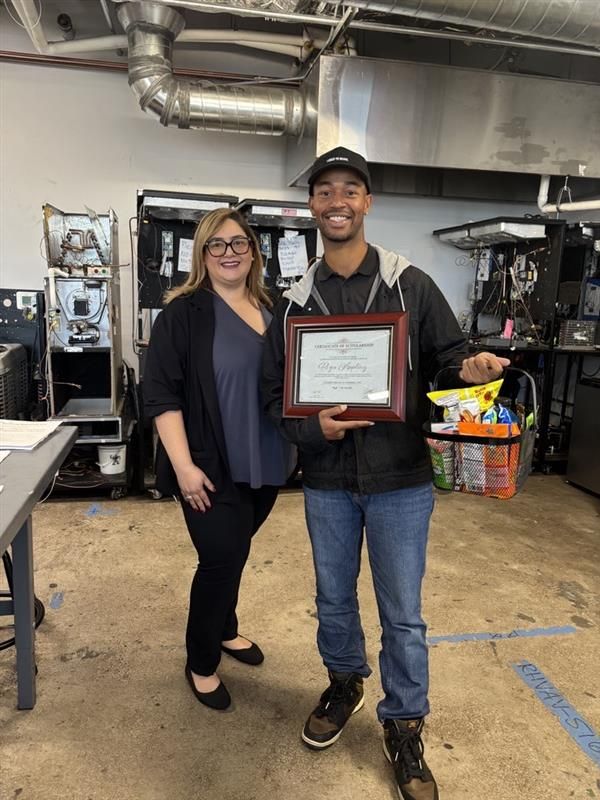
Practice your skills in fully equipped HVAC labs such as troubleshooting, brazing, piping, working with refrigerants, and more. During your training you’ll use HVAC equipment and gain hands-on training.
Automotive Technician
- Engine Theory and Systems – Review the development and design of vehicle engines, study disassembly and cleaning procedures, and get hands-on exposure to real engine components and diagnostic tools.
- Electrical Theory and Diagnosis – Learn how vehicle electrical systems work, including batteries, charging systems, lighting, and instrumentation. Practice using diagnostic equipment and safety protocols.
- Fuel Systems and Emission Control – Cover the functions of fuel delivery and injection systems, intake/exhaust operations, and emissions diagnostics, including hybrid and alternative fuel vehicles.
- Steering, Suspension & Passenger Comfort – Focus on tire/wheel alignment, steering mechanisms, suspension systems, and climate control to ensure safe and smooth vehicle operation.
- Brake Systems – Study the scientific principles behind braking systems, including hydraulic and ABS assemblies; train on inspection, servicing, and preventive maintenance techniques.
In this UEI program, students train in auto labs designed to mirror real professional repair shops. That means you’ll get your hands on actual domestic and foreign vehicles, working with industry standard tools and diagnostic technology just like you’d use in the field.
Each program includes hands-on labs, experienced instructors, and externship opportunities that let you apply what you’ve learned in real-world settings. UEI College provides the tools, support, and experience you need to build a lasting career in the trades, often in as few as 10 months.
Start building the career you’re looking for today. Contact us for more information about our exciting trade programs. To see which trade could be a good fit for you, take our Program Match quiz.